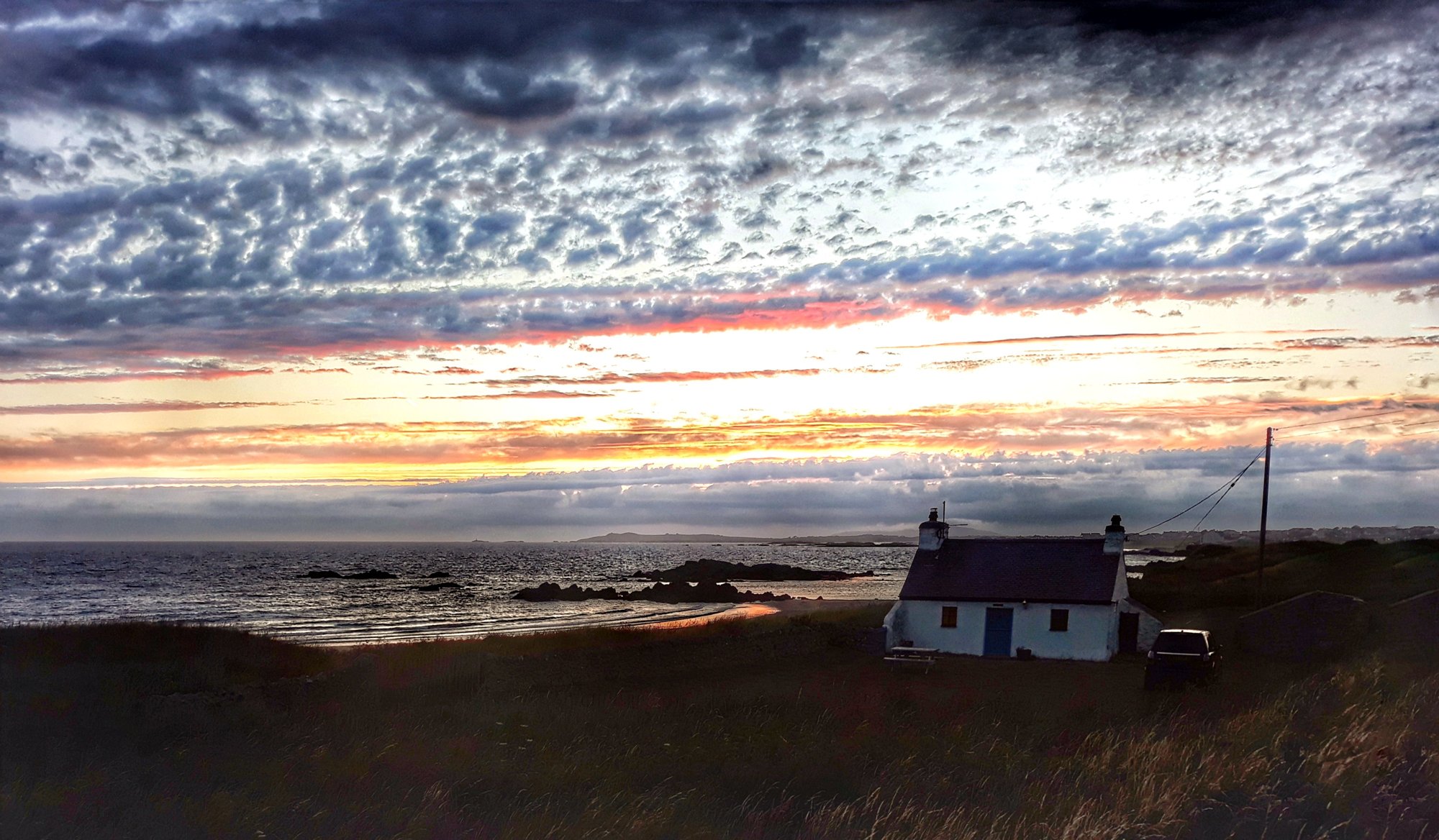
The Beaches of Rhosneigr
Sea and surf today
Stormy. Stay out of the water today and take care on the beach.
Around midday: big, 18 mph onshore wind, dry.
Rhosneigr has two beaches right on its doorstep and half a dozen more within a short drive, and no two of them are alike. One catches every swell coming in off the Irish Sea; another is so sheltered it barely ripples. One has a wood-fired sauna on the sand; another has a 12th-century church standing on its own island. Some are made for a day with a bucket and spade, others for a wild walk with nobody else in sight.
This guide takes you through each of them: what it's like, who it suits, where to park, whether you can bring the dog, and the stories that make each one worth knowing. Every practical detail has been checked against an official or first-hand source, and everything else comes from growing up on this stretch of coast.
The beaches at a glance
Traeth Crigyll
Best forSurfing, kitesurfing, families
- Dogs: All year
- Parking: Library car park, pay and display in season
- Toilets: Near the car park
Traeth Llydan (Broad Beach)
Best forSunsets, lessons, long walks
- Dogs: All year
- Parking: Free car park off the A4080
- Toilets: In the village
Traeth Cymyran
Best forRemote walks, beach fishing, surfing
- Dogs: All year
- Parking: Dirt track past RAF Valley to the dunes
- Toilets: None
Porth Tyn Tywyn
Best forThe beach sauna, surf for experienced only
- Dogs: All year
- Parking: Small roadside area
- Toilets: None
Porth Nobla
Best forRock pooling
- Dogs: All year
- Parking: Lay-by off the A4080
- Toilets: None
Porth Trecastell (Cable Bay)
Best forBodyboarding, kayaking, history
- Dogs: All year
- Parking: Pay and display above the bay
- Toilets: None
Porth Cwyfan
Best forThe church in the sea, wild swimming
- Dogs: All year
- Parking: Very limited, or walk from Aberffraw
- Toilets: None
Traeth Mawr, Aberffraw
Best forClean surf, estuary paddling
- Dogs: All year
- Parking: Free car park in Aberffraw
- Toilets: In the village
None of these beaches has a seasonal dog ban, which makes Rhosneigr one of the best bases on Anglesey for a holiday with a dog. Llanddwyn, further along the coast, is different, so read that section before you go.
The village beaches
Traeth Crigyll
Photo:
Eirian Evans /Geograph and Wikimedia Commons,CC BY-SA 2.0
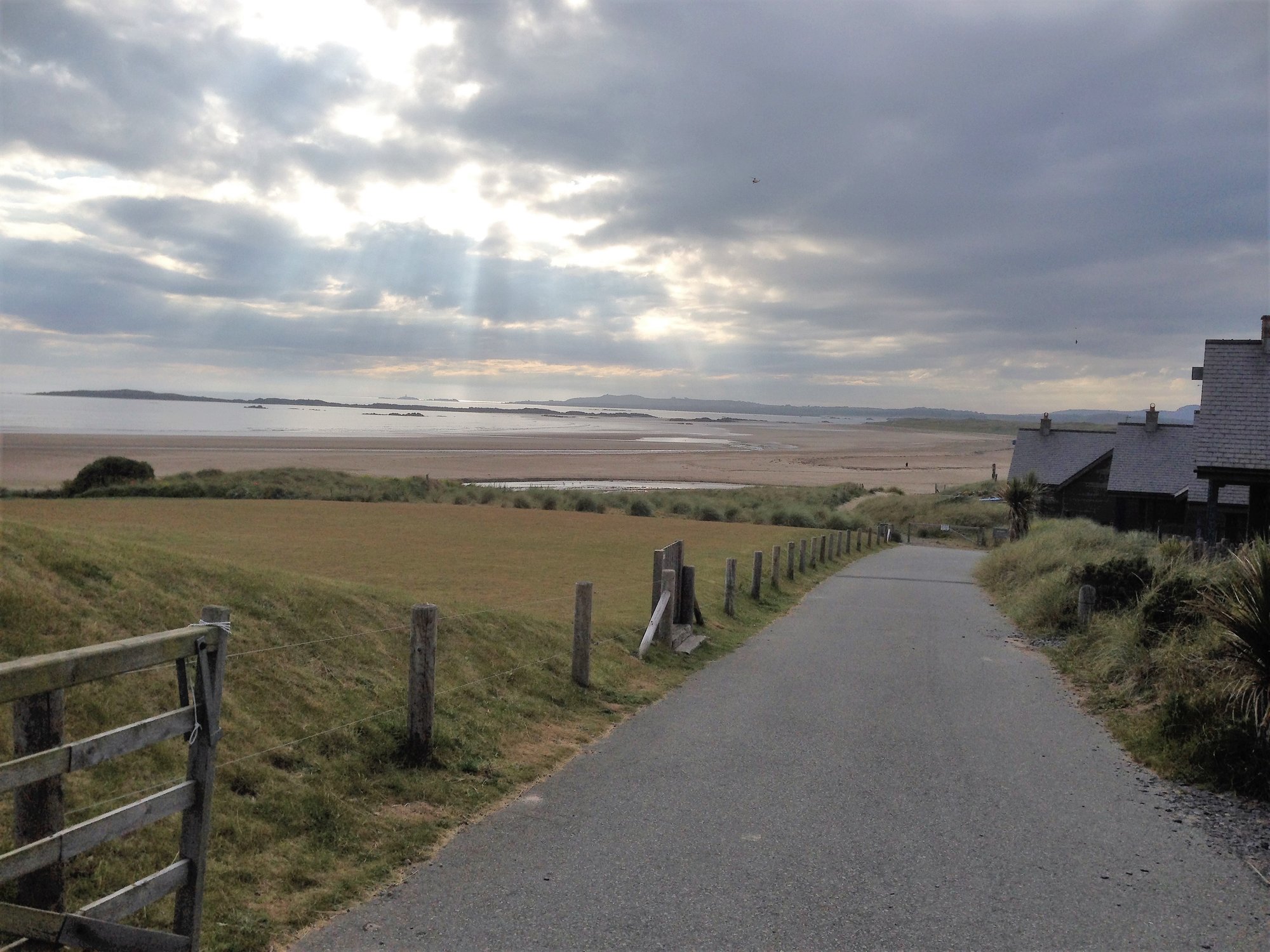
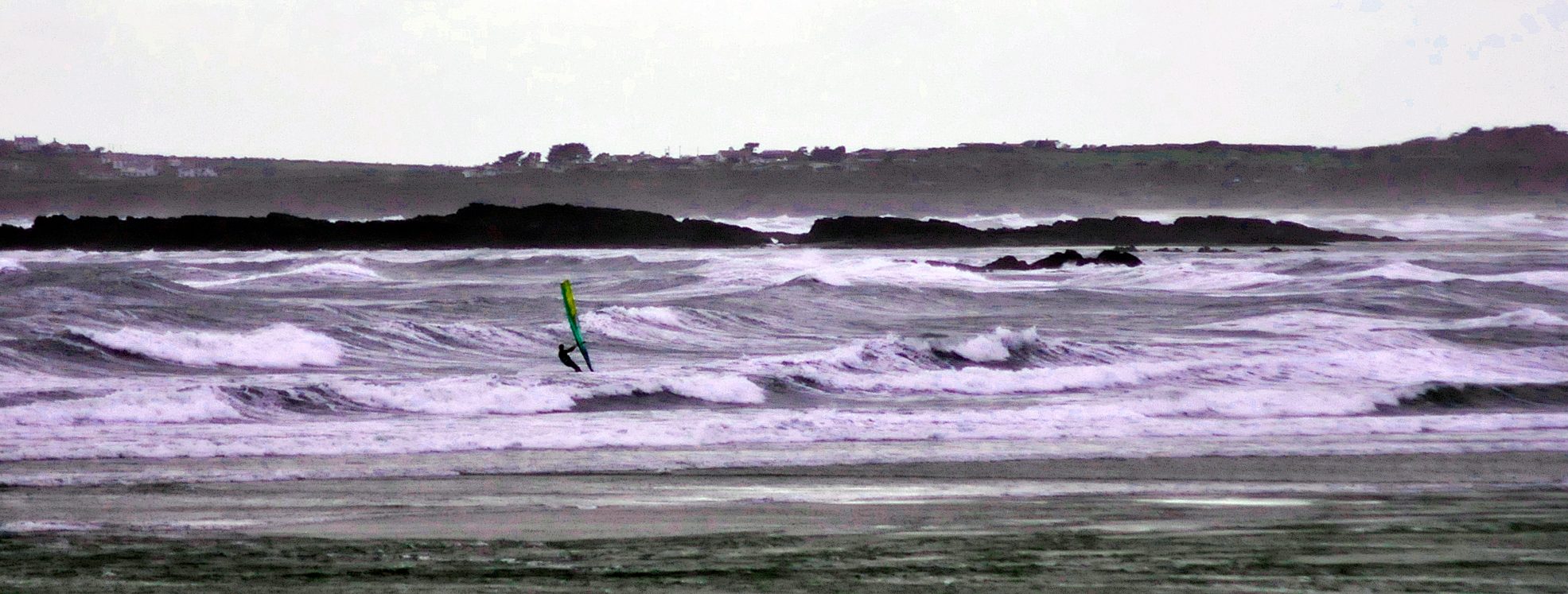
If Rhosneigr has a main beach, this is it. Traeth Crigyll runs north from the village, and on a breezy day you'll see why the place is known across Britain for watersports: kites and sails fill the sky, and the water is busy with windsurfers, paddleboarders and surfers.
The beach takes its name from the Afon Crigyll, the little river that spreads out across the sand on its way to the sea. At low tide its shallow channels make natural paddling pools, and young children can happily spend hours in them. It's the most family-friendly corner of the beach.
For surfers, Crigyll is the one to check first. It's the most accessible break and the hub of the village's surfing, and it is at its best in an easterly or north-easterly breeze, which blows offshore and grooms the waves. A westerly blows straight onshore and turns it messy, though that's exactly what the windsurfers come for. Low tide uncovers a wide, flat stretch of sand that's ideal for beginners learning to stand up. Do keep an eye on the currents near the river mouth, though.
Hire and lessons are right on the doorstep. Funsport, on Beach Terrace, and Gecko Surf both offer equipment hire and lessons, from surfing and paddleboarding to kitesurfing and wing foiling.
Traeth Llydan (Broad Beach)
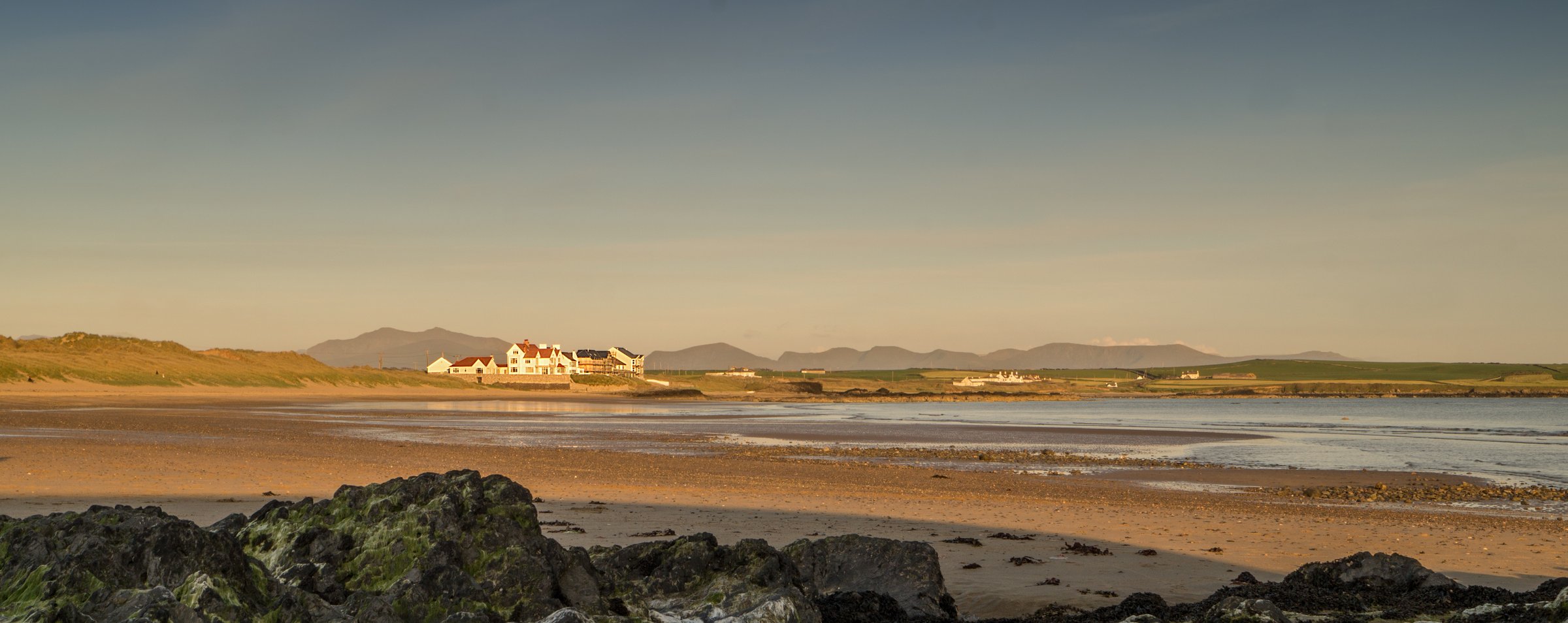
Photo:
Babyboomer100 /Pixabay,Pixabay Content Licence
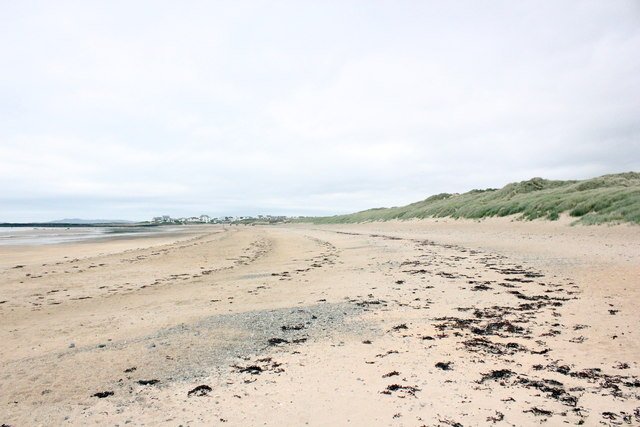
Walk south-east from the village and the beach opens out into Traeth Llydan, the Broad Beach, a long sweep of sand backed by dunes. It shelves gently into the sea, which is why the surf schools often bring beginners and paddleboarders here.
Sitting further south, beyond the shelter of the village reef, it picks up open Atlantic groundswell first, and local surfers know it as the heavier, more exposed of the two. It's slightly more sheltered from the wind than Crigyll, so it can be the better choice on a gusty day. Don't be fooled in winter, though: when big swells come through, the shore break here can be heavier and hollower than you'd expect.
The sunset spot. With nothing between it and the open sea to the south-west, Traeth Llydan is one of the best places on Anglesey to watch the sun go down. And if the weather turns wild, you can watch the storm roll in from inside The Oyster Catcher, the restaurant and bar tucked behind the dunes at Llyn Maelog.
Traeth Cymyran
Photo:
Jeff Buck /Geograph and Wikimedia Commons,CC BY-SA 2.0
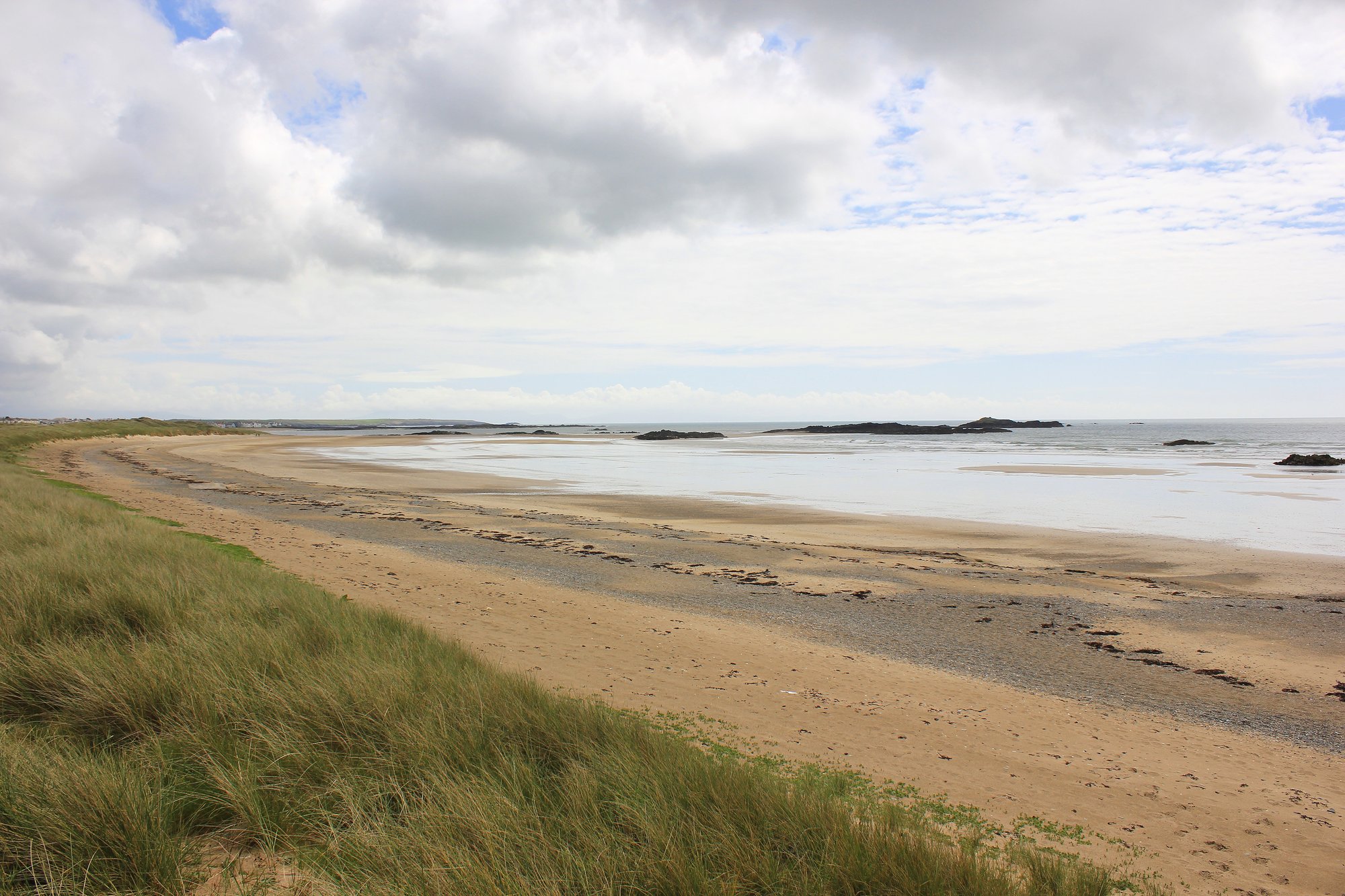
Keep walking beyond Crigyll and the crowds fall away completely. Traeth Cymyran is the wildest of Rhosneigr's beaches: a long, empty stretch of sand with no cafés, no toilets and, most days, hardly anyone else on it.
Strong tidal currents run through the river mouth and the Cymyran Strait, so keep well away from that end of the beach in the water. Further down the beach, away from the river, local surfers often have the peak to themselves; the surfing guide has more.
What makes Cymyran unforgettable is the sky. The beach lies under the flight path of RAF Valley, and training jets regularly roar low overhead, a startling contrast with the quiet of the shore below.
Along the coast towards Aberffraw
Follow the A4080 out of the village towards Aberffraw and a string of smaller coves opens up, each with its own character. They're all quieter than the village beaches, and most have no facilities at all, so they reward a bit of planning.
Porth Tyn Tywyn
Photo:
Hefin Owen /Wikimedia Commons,CC BY-SA 2.0
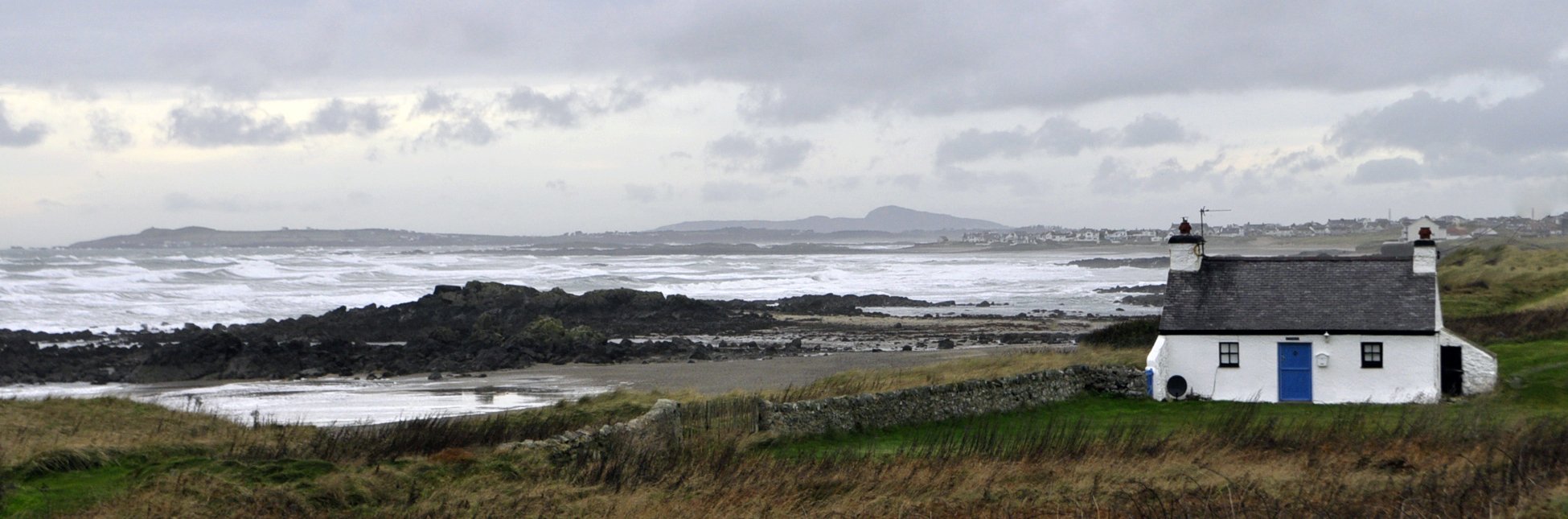
At high tide Porth Tyn Tywyn looks like the gentlest beach on the coast: soft sand, backed by dunes, with barely a soul on it. But as the water drops, it reveals its secret: rocky ledges and thick kelp reefs hidden just beneath the surface. That's why it's a quiet sanctuary for local surfers, who know exactly where the rocks are, when Crigyll gets crowded. In an easterly breeze it can deliver clean, sheltered waves, but it's for experienced surfers only. If you don't know the reef, enjoy the sand and leave the surf to the locals.
It's also home to one of Anglesey's most memorable experiences. Sawna Bach, a wood-fired sauna right by the sand, has been here since 2023, and the local ritual is simple: warm up in the sauna, then run straight into the sea, and repeat. You can book a seat in a shared session or hire the whole sauna for your group. It's open Thursday to Tuesday, with extra days in school and bank holidays, and is for over-16s only. Book ahead on their website.
Porth Nobla
Photo:
Hefin Owen /Wikimedia Commons,CC BY-SA 2.0
A small crescent of sand and shingle scattered with rocky islets, Porth Nobla is all about what the tide leaves behind. At low tide its deep, sheltered rock pools become natural aquariums, and it's one of the best places on this coast to find velvet swimming crabs and anemones without the village crowds. When the main Rhosneigr beaches are blown out, it can also give a gentle longboard session.
Porth Trecastell (Cable Bay)
Photo:
Jeff Buck /Geograph and Wikimedia Commons,CC BY-SA 2.0
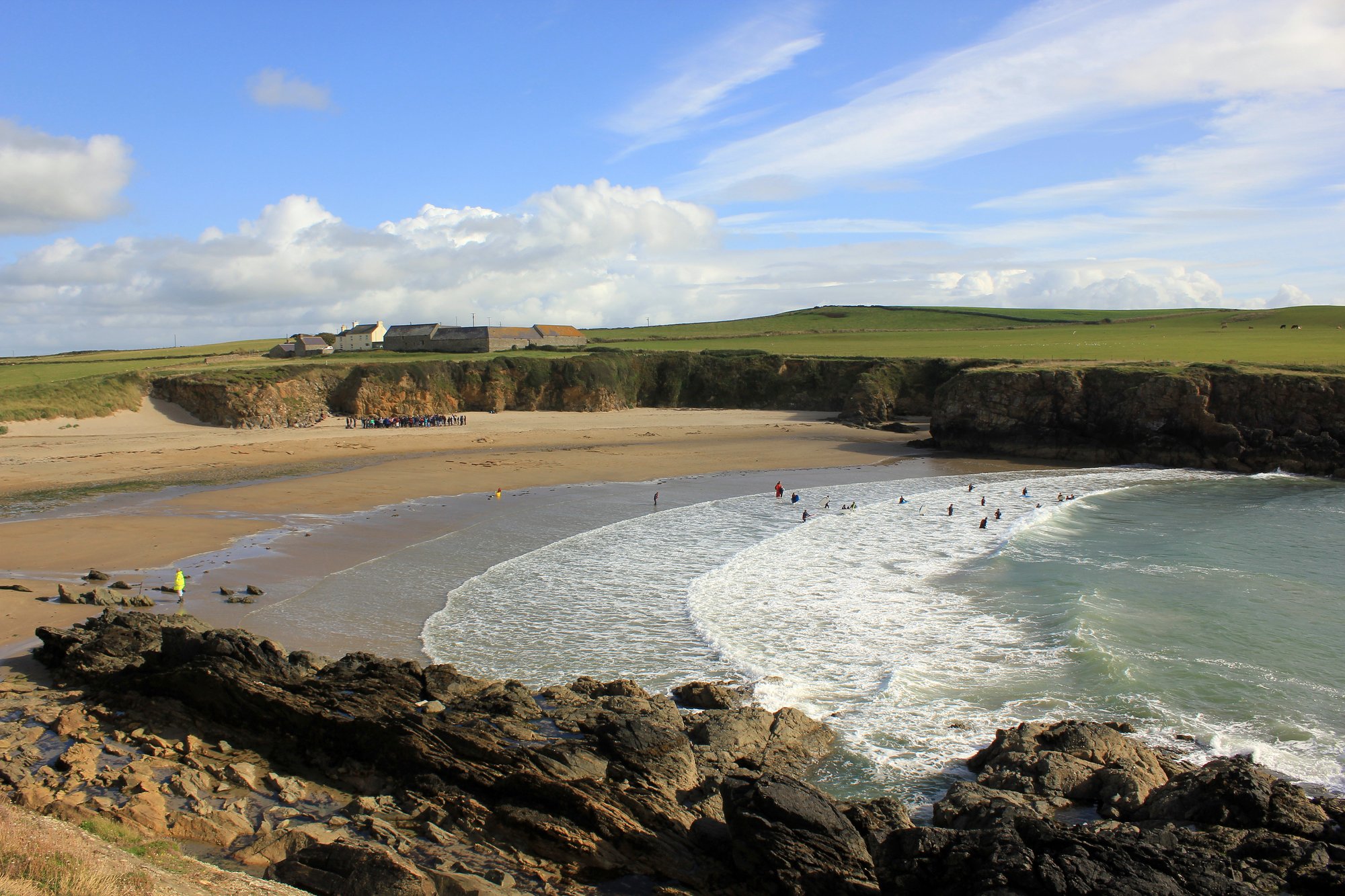
This narrow bay between rocky headlands is a favourite with bodyboarders and kayakers. Its funnel shape focuses incoming swell into short, punchy waves, and it stays relatively sheltered when the wind blows from the sides.
Its English name tells a story. Telegraph cables linking Anglesey with Howth, near Dublin, came ashore here, the first in 1871 and another in 1902, carrying messages between Britain and Ireland beneath the sand.
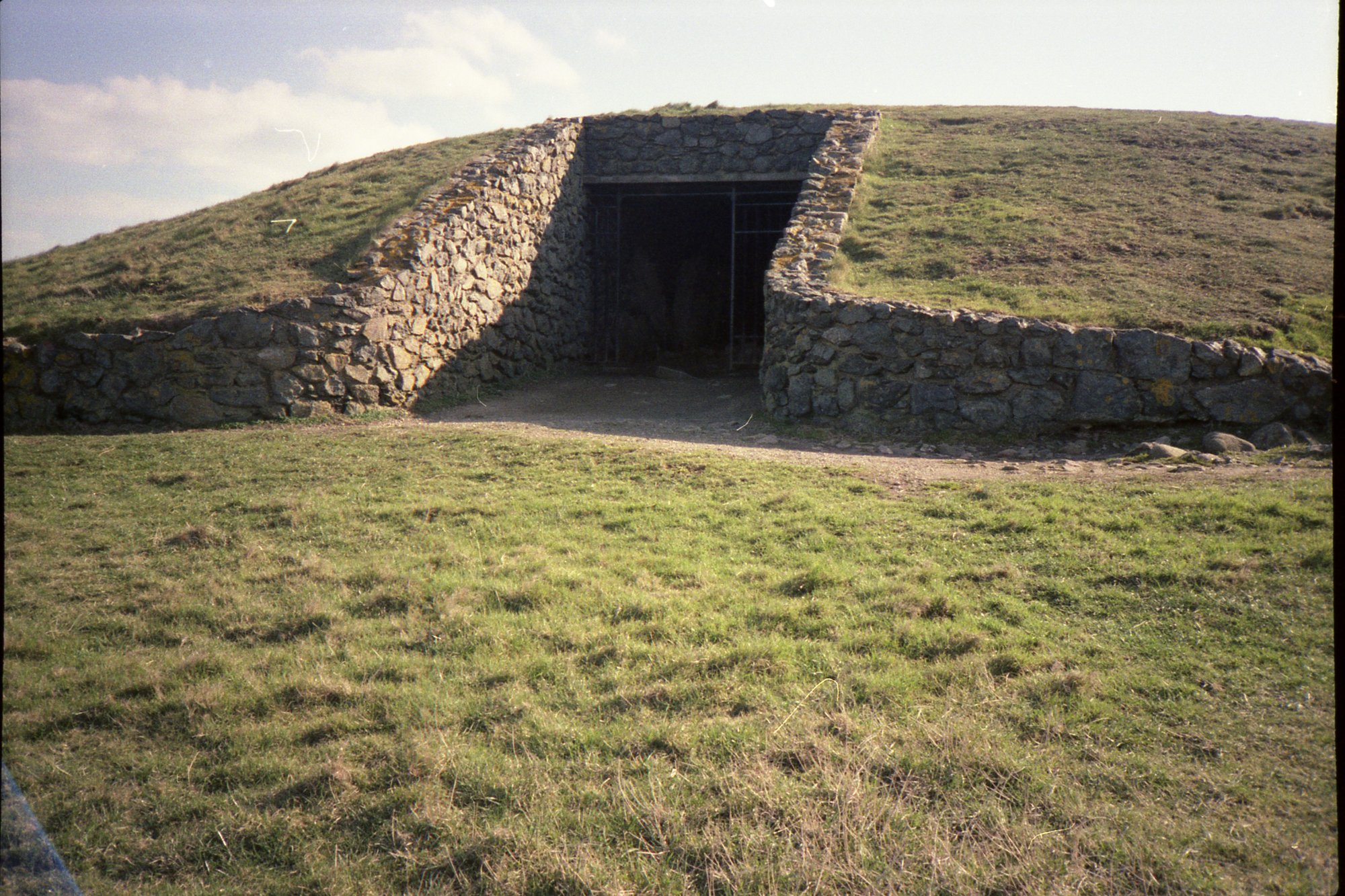
Barclodiad y Gawres. On the headland above the bay sits one of the most remarkable prehistoric sites in Wales. Its name means "the Giantess's Apronful". Under a reconstructed earth mound, a passage leads to a cross-shaped Neolithic burial chamber, and five of its stones are carved with zig-zags and spirals. The only other tomb in Britain with art like this is Bryn Celli Ddu, also on Anglesey. It's looked after by Cadw, free to visit, and can be viewed from outside between 10am and 4pm all year, with guided tours inside on selected summer dates. Dogs are welcome. Take care on the lower coast path, where erosion has affected the cliffs.
Barclodiad y Gawres above Porth Trecastell
Photo by Peter Bond.
Towards Aberffraw
Porth Cwyfan and the church in the sea
Photo:
Alf Bailey /Wikimedia Commons,CC BY-SA 3.0
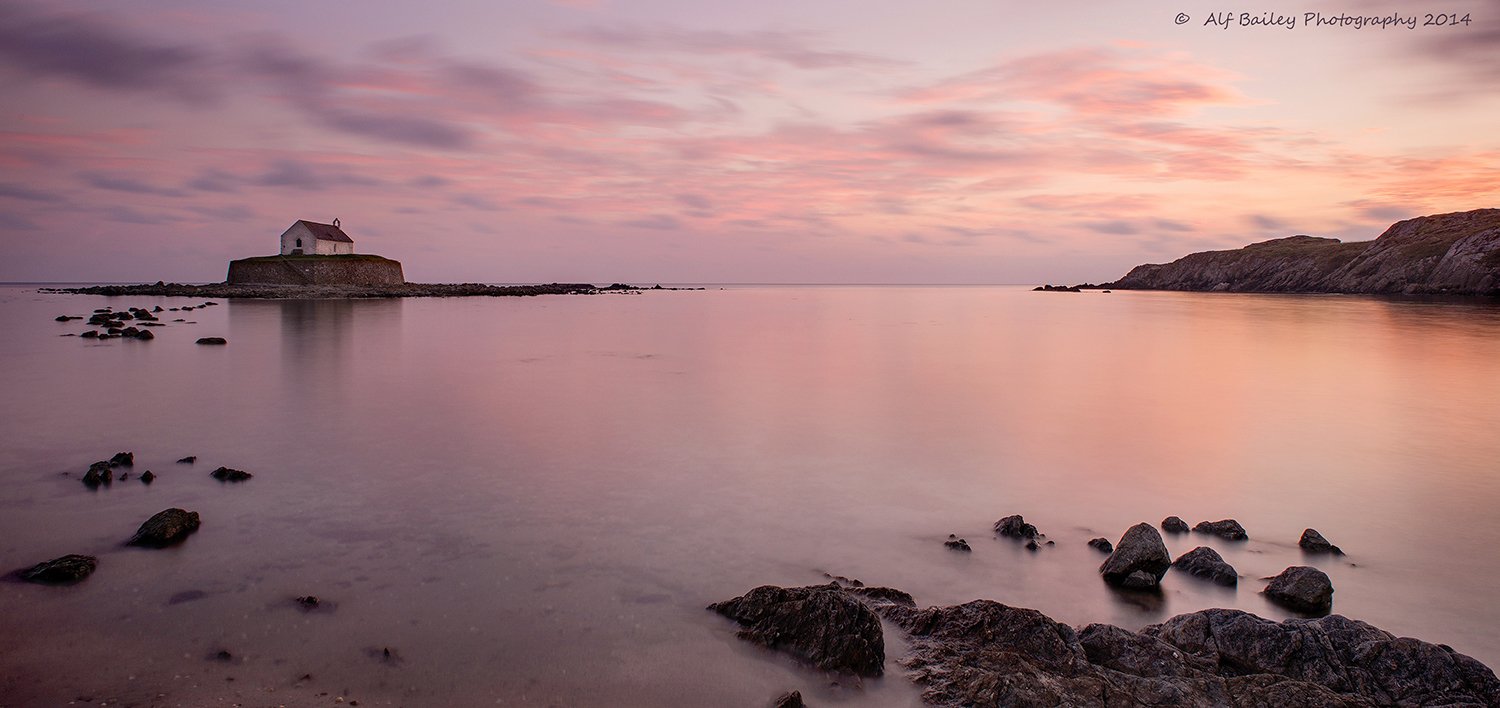
Of all the views on Anglesey, few stop people in their tracks like this one: a small whitewashed church standing alone on a walled island in the bay, cut off from the land at every high tide.
St Cwyfan's dates from the 12th century, and it didn't always stand in the sea. John Speed's map of Anglesey from 1636 shows it at the end of a peninsula between two bays. Over the centuries the waves ate away at the land until the churchyard became an island, the tidal islet of Cribinau. By the late 19th century graves were falling into the sea and the church stood roofless. In 1893 a local architect, Harold Hughes, raised the money to build the sea wall that still protects it today, and restored the church. It's still used for occasional services and weddings, and it's one of the most photographed buildings on Anglesey.
You can only walk out to the island at low tide, so check the tide times before you go. The church itself opens by special arrangement only, but the walk out and the views back to the coast are reason enough to visit. The bay is also lovely for wild swimming and rock pooling, and on a big winter swell an experienced surfer may find a wave peaking over the rocky shelf around the island.
Traeth Mawr (Aberffraw beach)
Photo:
Jeff Buck /Geograph and Wikimedia Commons,CC BY-SA 2.0
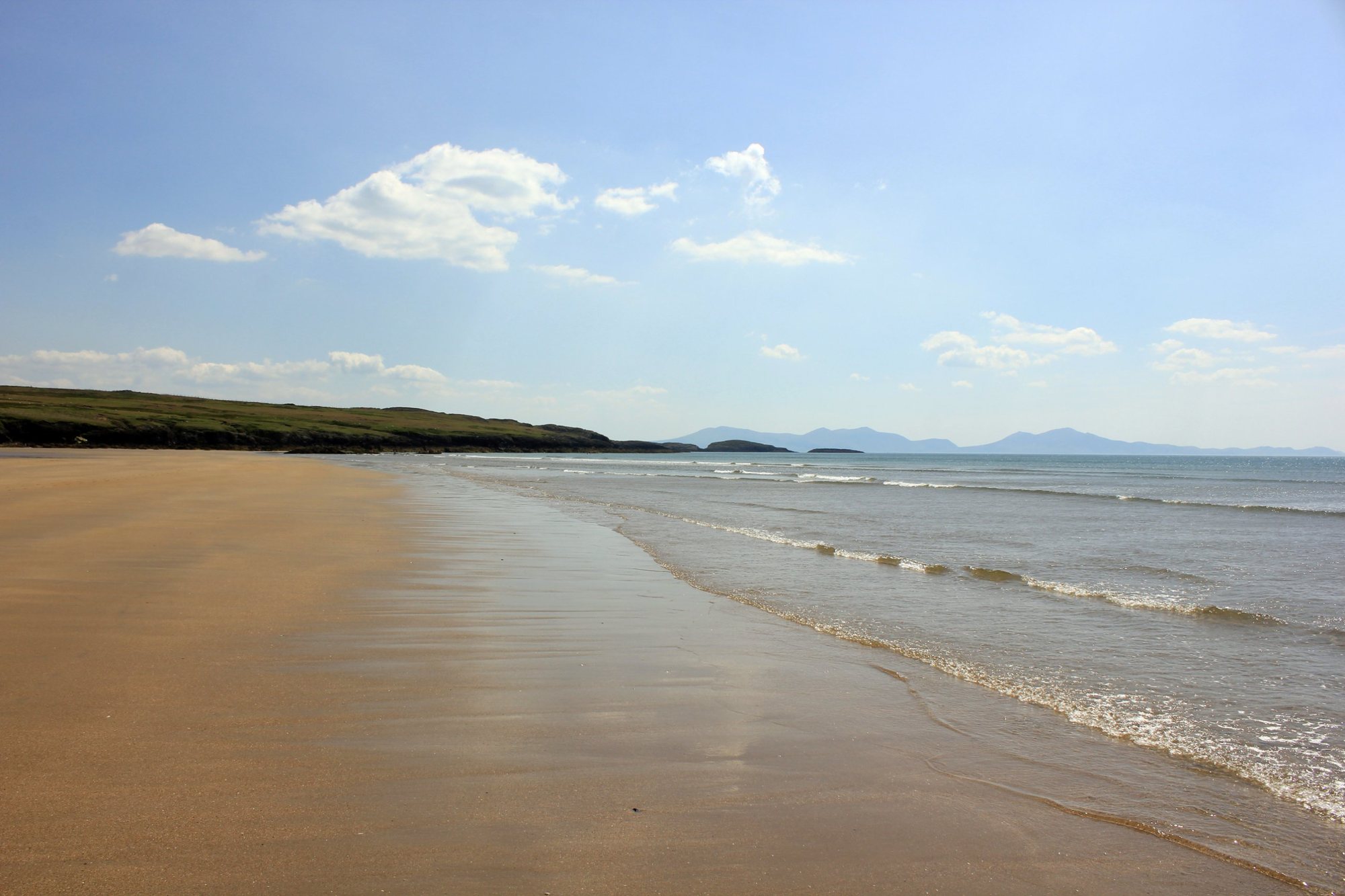
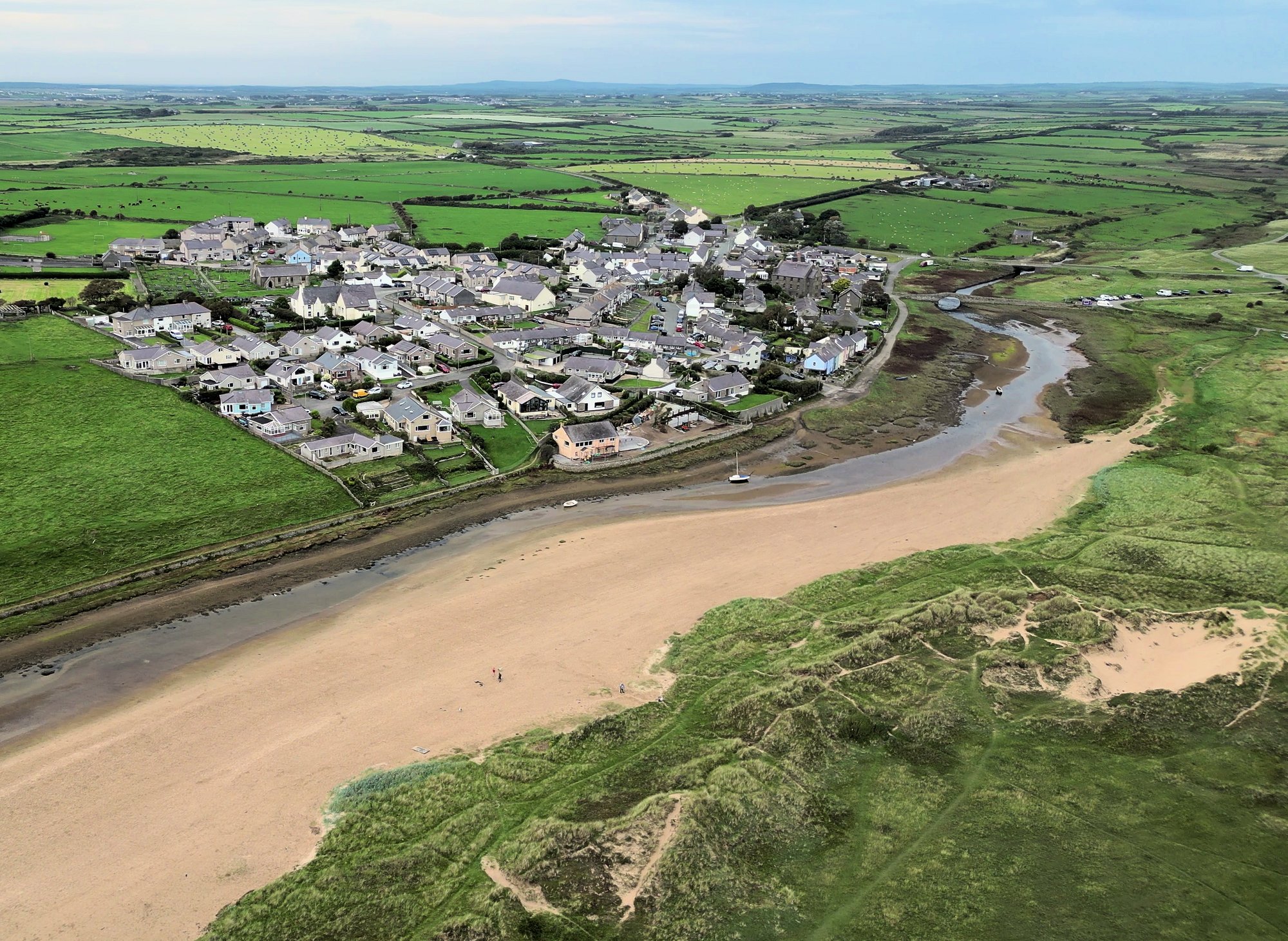
Aberffraw's beach is a place to arrive at slowly. From the free car park on the edge of the village, it's about half a mile on foot beside the river estuary before the dunes open up to the sea, and it's one of the loveliest beach walks on the island.
Local surfers rate it highly. With headlands on either side and the river mouth shaping the sandbanks, it can produce clean, well-formed peaks on a south-westerly swell, often cleaner than the beaches at Rhosneigr. The headland of Trwyn Du, on its northern side, shelters it from northerly and north-westerly winds, so when a strong northerly blows Rhosneigr out, Aberffraw can still offer glassy lines peeling along the southern edge of the bay. There's no hire or surf school here, so bring your own kit. At high tide the estuary is perfect for flat-water paddleboarding.
The dunes behind the beach are part of the Abermenai to Aberffraw Dunes Special Area of Conservation, protected for their wildlife. The village has an even older claim to fame: by the 9th century Aberffraw was the seat of the princes of Gwynedd, the royal heart of medieval Wales. Their court is long gone; its stones were later carried off to build Beaumaris Castle.
A reminder of those royal days still stands in the village. St Beuno's Church dates from the 12th century and may have served as a royal chapel for the princes' court.
Afterwards, head into the village for cake and a hot drink at Llys Llewelyn Tea Rooms.
Further afield: Llanddwyn
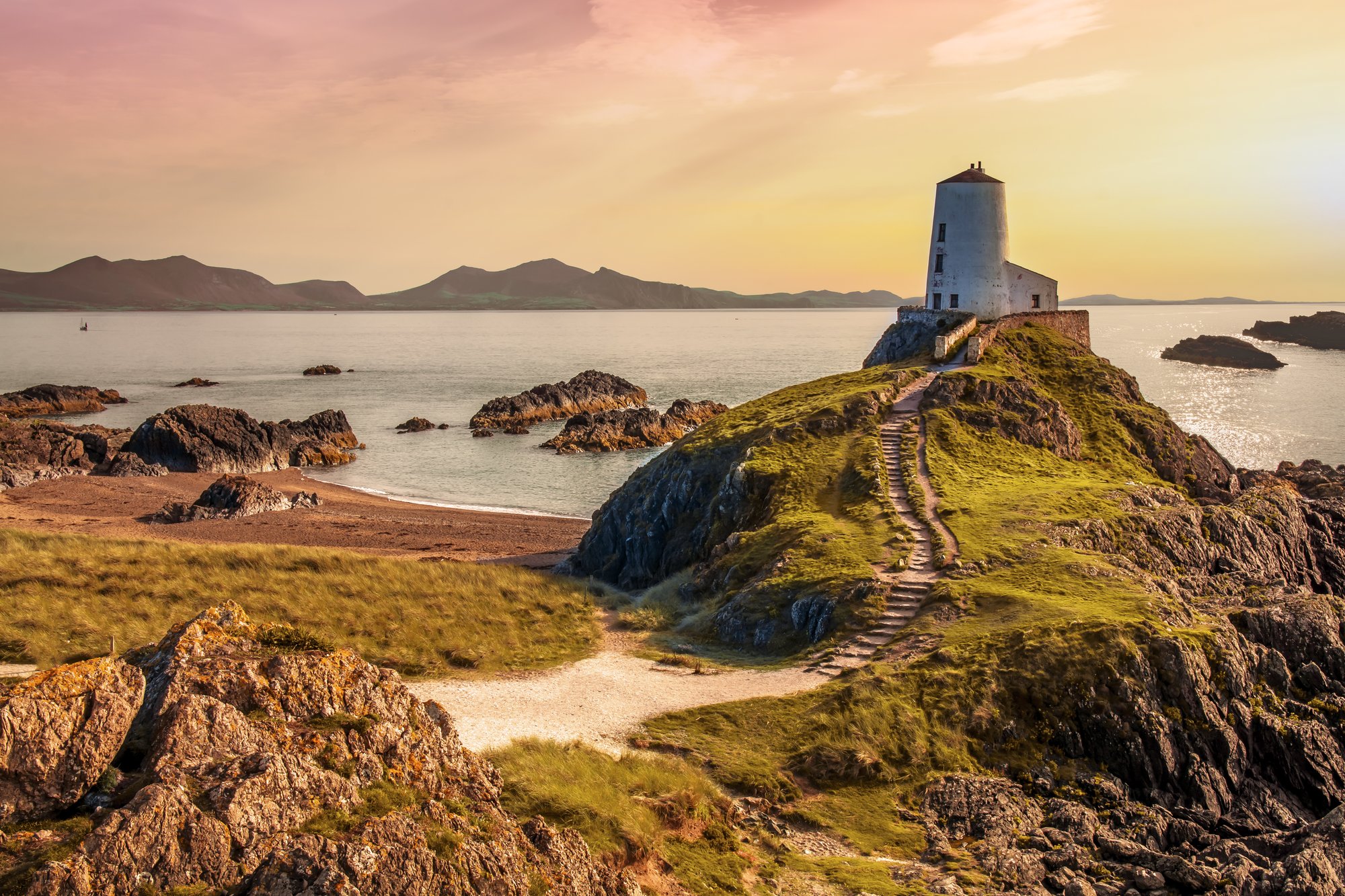
Photo:
Mark Warren 1973 /Wikimedia Commons,CC BY-SA 4.0
If you have a car and a free day, the drive south to Newborough is worth every minute. Llanddwyn beach stretches for miles beside Newborough Forest, with views across to the mountains of Eryri, Caernarfon and the Llŷn Peninsula, and at its far end lies Ynys Llanddwyn, one of the most romantic places in Wales.
The island is dedicated to St Dwynwen, the Welsh patron saint of lovers, whose feast day on 25 January is Wales's own Valentine's Day. Walk out to see the ruins of her church and the white lighthouse looking out over the sea. Just watch the tide: the island is cut off from the mainland for roughly an hour or two either side of high tide, so check the tide times before you set out.
The beach is also a world-class spot for kitesurfing and windsurfing, with shallow, clear water over the sandbanks. There's no hire, so bring your own kit.
Before you go
Check the tides. They matter more here than almost anywhere: for reaching St Cwyfan's and Llanddwyn, for rock pooling at Porth Nobla, and for the surf on every beach.
Respect the water. Currents can be strong, especially near river mouths, and at Traeth Cymyran you should keep well away from the river mouth. There are no lifeguards on any of these beaches, so know your limits, never swim alone, and if you're new to watersports, book a lesson with one of the local schools. In an emergency at sea, call 999 and ask for the Coastguard.
Dogs. All of Rhosneigr's beaches welcome dogs all year round. Llanddwyn is the exception in summer. Please always clean up after your dog.
Parking. The small coves have very little space, and it goes quickly in summer. Arrive early, park considerately, and never block field gates or lanes.
Leave only footprints. Several of these beaches back onto protected dunes. Stick to the paths and take your litter home.
Details in this guide were checked in October 2026.
Been here? Share a photo.
Related guides
Photo credits
- Sunset at Porth Nobla. Photo by Hefin Owen, CC BY-SA 2.0, cropped, via Wikimedia Commons.
- Traeth Crigyll. Photo by Eirian Evans, CC BY-SA 2.0, via Geograph and Wikimedia Commons.
- A windsurfer at Traeth Crigyll. Photo by Hefin Owen, CC BY-SA 2.0, cropped, via Wikimedia Commons.
- Traeth Llydan. Photo by Jeff Buck, CC BY-SA 2.0, via Geograph.
- Traeth Cymyran. Photo by Jeff Buck, CC BY-SA 2.0, via Geograph and Wikimedia Commons.
- Looking towards Holyhead Mountain. Photo by Hefin Owen, CC BY-SA 2.0, via Wikimedia Commons.
- Porth Trecastell. Photo by Jeff Buck, CC BY-SA 2.0, via Geograph and Wikimedia Commons.
- Barclodiad y Gawres above Porth Trecastell. Photo by Peter Bond, CC BY-SA 2.0, via Geograph and Wikimedia Commons.
- St Cwyfan's, the church in the sea. Photo by Alf Bailey, CC BY-SA 3.0, cropped, via Wikimedia Commons.
- Traeth Mawr, Aberffraw. Photo by Jeff Buck, CC BY-SA 2.0, via Geograph and Wikimedia Commons.
- St Beuno's Church, Aberffraw. Photo by Llywelyn2000, CC BY-SA 4.0, via Wikimedia Commons.
- Llanddwyn Island lighthouse. Photo by Mark Warren 1973, CC BY-SA 4.0, via Wikimedia Commons.