Summer
June to August
Sea temperature
At its warmest, mid-teens °C
What to wear
3/2mm full suit; a shorty on the rare hot day
Stormy. Stay out of the water today and take care on the beach.
Based on daytime wind and wave size. Dashed days are further ahead and less certain.
Rhosneigr is Anglesey's surf village. Within a few miles of the high street there are half a dozen breaks, each facing the swell in its own way, from forgiving beach waves where beginners learn to stand up, to technical reef breaks that only reward people who know them well.
It's also the island's watersports hub, so you'll share the water with windsurfers, kitesurfers and wing foilers. When the wind is wrong for surfing, it's usually right for them, and on a good day the bay is alive with all of it.
This guide is for anyone who wants to surf here: when to come, how to read the conditions like a local, which beach to choose, where to learn and hire kit, and how to stay safe.
If you're after proper surf, the best months are October to February. That's when deep Atlantic low-pressure systems send long-period groundswell up into the Irish Sea and onto Anglesey's west coast. Late autumn, October and November, is the sweet spot: the sea still holds some of its summer warmth, but the winter swells have already arrived.
Summer is a different story. It's often flat or small, the water is at its warmest, and the beaches are busy with families. That makes it a great time to learn, with gentle whitewater and lessons running, but don't plan a summer trip around big waves.
The Irish Sea is cold for most of the year, and the right wetsuit is what keeps you in the water.
June to August
Sea temperature
At its warmest, mid-teens °C
What to wear
3/2mm full suit; a shorty on the rare hot day
September to November
Sea temperature
Cooling, low teens °C
What to wear
4/3mm suit, and boots by November
December to April
Sea temperature
Coldest, around 8°C
What to wear
5/4mm or 6/5mm hooded suit, 5mm boots and gloves
If you're hiring, the local shops have wetsuits, so you don't need to bring your own.
A basic weather app won't tell you whether it's worth paddling out. Locals look at three things.
Swell period, not just size.
Look for a period of around 8 to 9 seconds or more. Longer-period groundswell has the energy to push properly into the bays; short-period windswell tends to arrive weak and messy. Surf-forecasting sites such as Surfline and Surf-Forecast show this.
The wind direction, hour by hour.
Rhosneigr's beaches face west to south-west, so you want wind from the east or north-east, blowing offshore and grooming the waves. A westerly blows straight onshore and turns everything ragged. Locals cross-check the wind models (such as GFS and WRF) on sites like Windguru and Windfinder to pin down the exact hour the wind swings round to the north-east.
The live view.
Before packing the car, check Funsport's webcam on their website for the real state of the water. A good tell: if the kitesurfers are out on small kites, it's blowing hard, and the surf is probably blown out.
The tide matters too, and differently on every beach. The table in the next section shows which tide suits each break.
Cymyran is one of the most challenging breaks to get to in North Wales, and getting there is half the adventure. A bumpy dirt track takes you past the end of the RAF Valley runways and a row of MOD signs warning you to keep out, with RAF police dogs on patrol. Stay on the track, park up, and carry your board through the sand dunes while jets roar overhead. The reward for making the effort: you'll often have the peak to yourself. It picks up the same swell as Traeth Llydan and works on any tide.
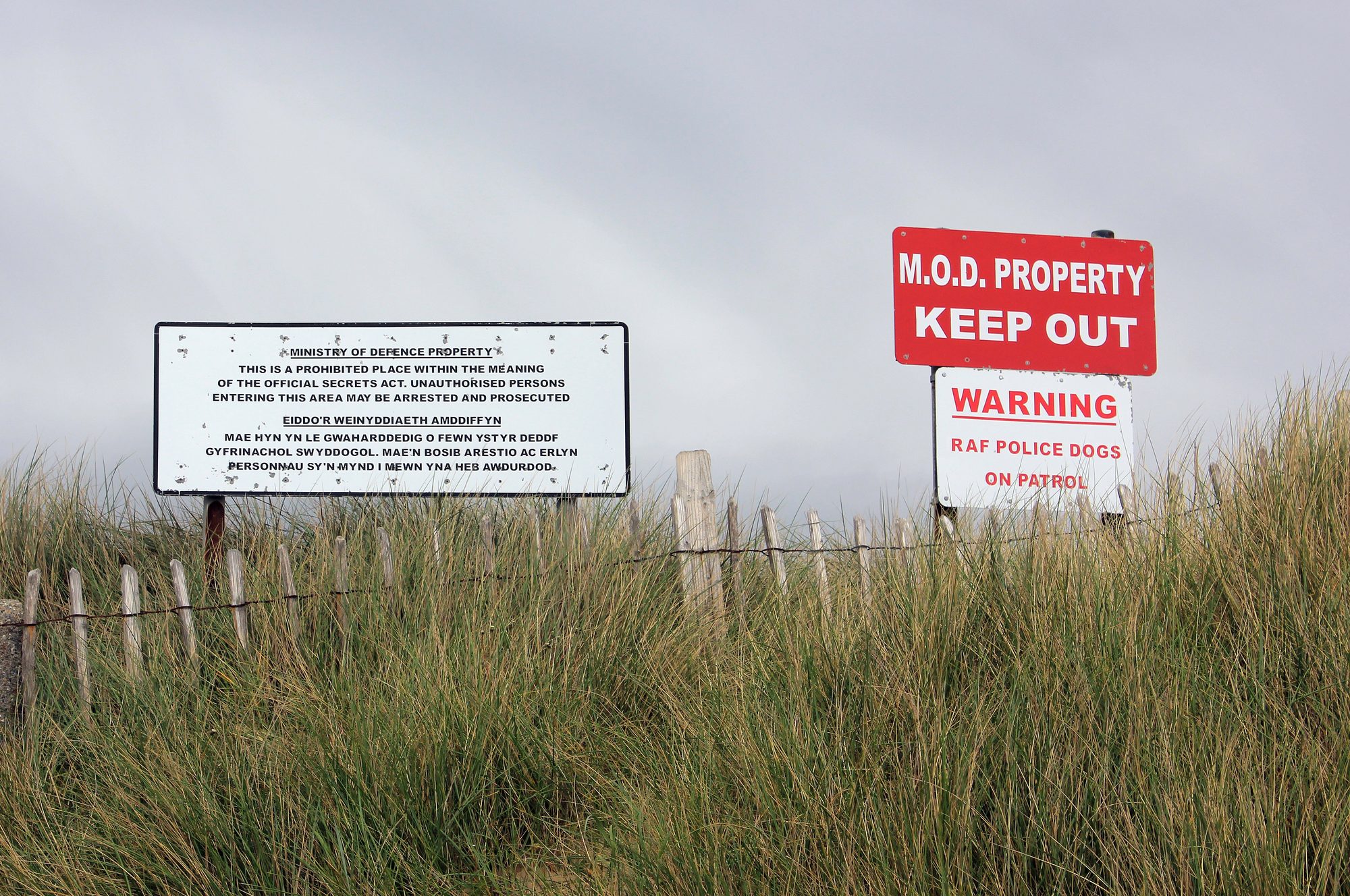
Photo:
Jeff Buck /Geograph and Wikimedia Commons,CC BY-SA 2.0
The most accessible break and the hub of the village's surfing, a few steps from the high street. Its gentle, sandy slope makes it the most forgiving place on the coast to learn to pop up, and low tide is ideal for beginners finding their feet in the whitewater. As the tide pushes in, the sandbanks start to line up and the waves take on better shape. It works best on a solid south-westerly swell with a north-north-easterly to north-easterly breeze grooming the faces. It can hold its shape in a straight easterly, but any wind from the west ruins it almost instantly. Short-period storm swell turns it into an unruly wall of whitewater that closes out across the whole bay, so check the swell period before you go.
Sitting further south, beyond the shelter of the village reef, Traeth Llydan picks up open groundswell first. Locals know it as the heavier, more exposed of the two village beaches, with a steeper, more powerful take-off than Crigyll. It's best from low to mid tide; at high tide the water reaches the pebbles and dunes, and backwash spoils the waves. In bigger winter swells it can turn into a heavy shore break.
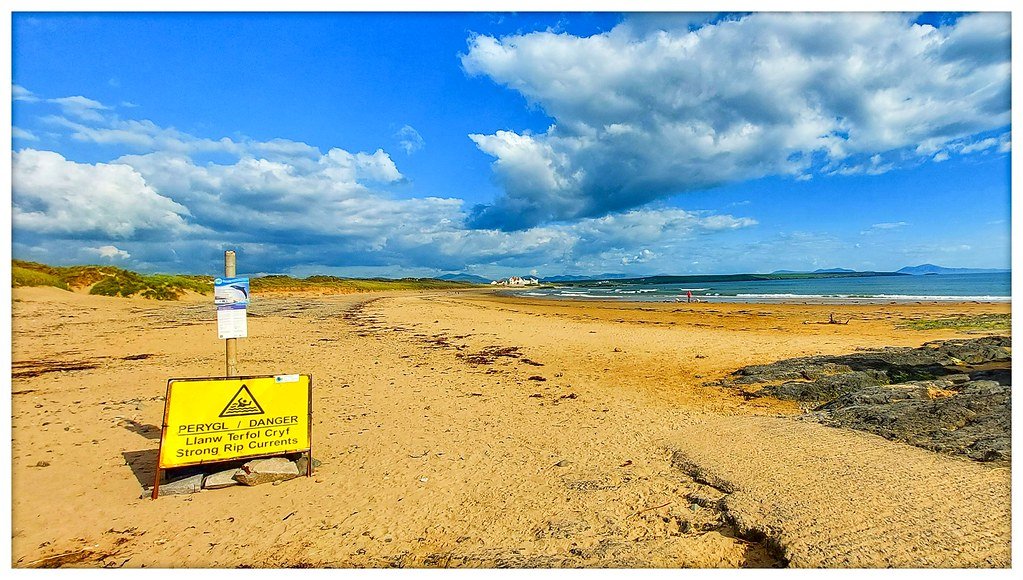
Photo:
Hefin Owen /Flickr,CC BY-SA 2.0
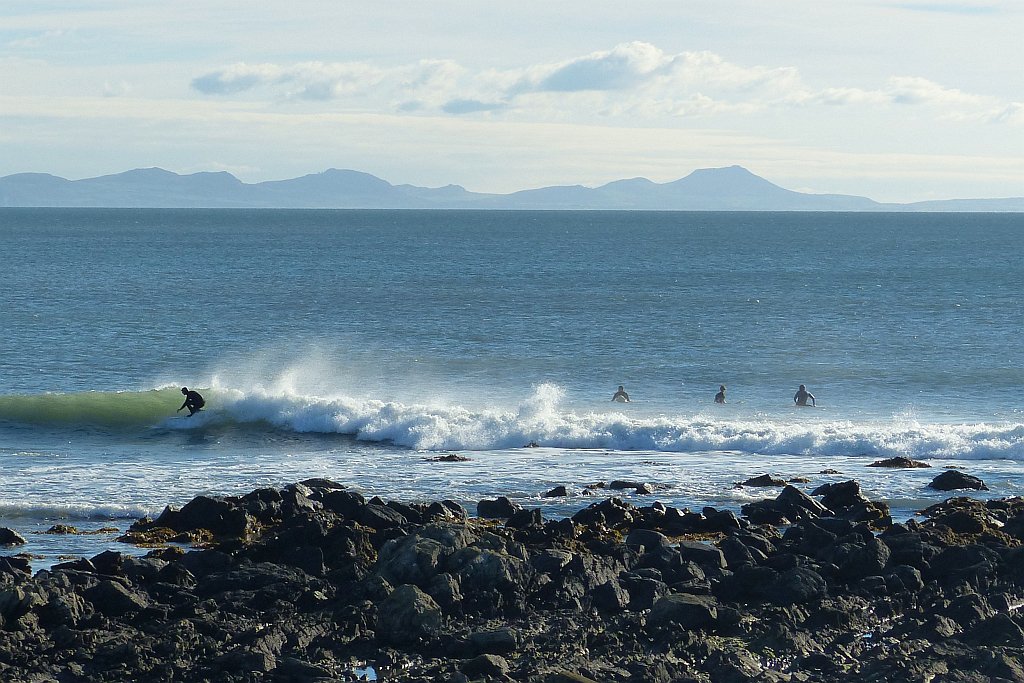
At high tide it looks like a harmless sandy cove. As the tide drops, rocky ledges and thick kelp reefs appear just below the surface. It needs a substantial, long-period south-westerly groundswell to push past the reefs, and a short-period windswell soon closes it out. It's best mid-tide on the push, with an east to east-north-easterly wind: high tide swamps it, and low tide leaves the rocky ledges exposed. This is a quiet spot for locals precisely because they know where the rocks are.
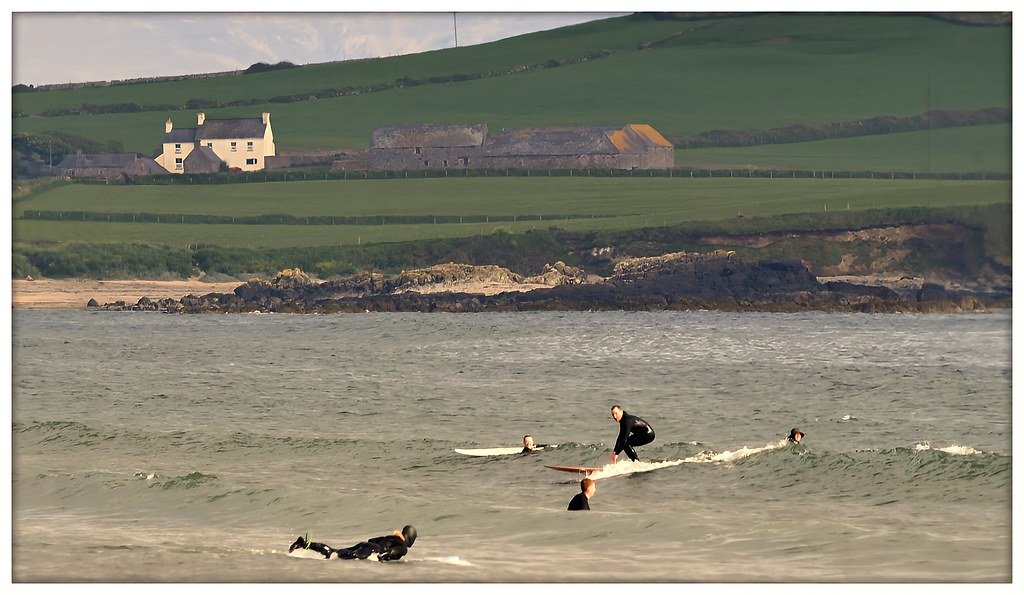
Photo:
Hefin Owen /Flickr,CC BY-SA 2.0
The narrow bay acts like a funnel, squeezing south-westerly swell into short, punchy, wedging waves with fast, steep take-offs. When the village beaches are out of control, the narrow, deep cove keeps the swell rideable for longer than anywhere else nearby, before it too turns into a washing machine, and the headlands shelter it from cross-shore winds that ruin the village beaches. Best at mid tide: at low tide it closes out across the mouth of the bay, and at high tide the waves break straight onto the pebbles.
Not a regular surf spot, but an unforgettable one. It takes an enormous, raw winter groundswell to bring lines onto the outer reef around the church island, and short-period swell closes it out instantly. It's best in a light northerly to north-easterly or dead calm, from low to mid tide, before the rising tide swallows the way across to the island. The wave is highly inconsistent, and the paddle-out crosses shallow rock beds.
Photo:
Robin Drayton /Geograph and Wikimedia Commons,CC BY-SA 2.0
It needs a big south-westerly groundswell to wake up, but when it does, the sandbanks at the river mouth shape it into beautiful, long marching walls. A short, local windswell closes it out. When it's small it suits beginners and improvers; in a big winter swell it's one for experienced surfers. Best from low tide, rising.
Two local businesses cover everything from your first lesson to a new board.
One of the UK's longest-running watersports shops, here since 1995. Funsport runs lessons in surfing, paddleboarding, windsurfing, kitesurfing and wing foiling, rents out equipment, including surfboards and winter wetsuits, and has a shop full of boards, wetsuits and accessories. Its staff live and breathe these waters. They also run a kids' beach club, host events such as the BWA Rhosneigr Wave Classic, and keep the webcam that every local checks before heading out.
A surf and paddleboard school with a shop on the high street. Gecko offers surf and paddleboard lessons, kitesurfing and coasteering, plus equipment hire, a shop and gift vouchers. Lessons are booked by phone.
Both are listed in our directory, with opening details and links.
There are no lifeguards on any of Rhosneigr's beaches, so your safety is in your own hands.
Know your level. If you're new, take a lesson or stick to Traeth Crigyll in small conditions. The reef breaks are for experienced surfers only.
Never surf alone, especially at Porth Cwyfan, Porth Tyn Tywyn or in winter.
Respect the river mouths. Currents at the Afon Crigyll and in the Aberffraw estuary can pull you out fast. At Traeth Cymyran, surf down the beach, away from the river mouth.
If you're caught in a rip, don't fight it. Stay on your board, paddle parallel to the beach until you're free of the current, then head back in on the waves.
Check the tide before you go. It changes every break here, and at Porth Cwyfan it decides whether you can get back.
Dress for the water, not the air. Cold water saps strength faster than you expect, especially in winter.
In an emergency at sea, call 999 and ask for the Coastguard.
Details in this guide were checked in October 2026.
Been here? Share a photo.